
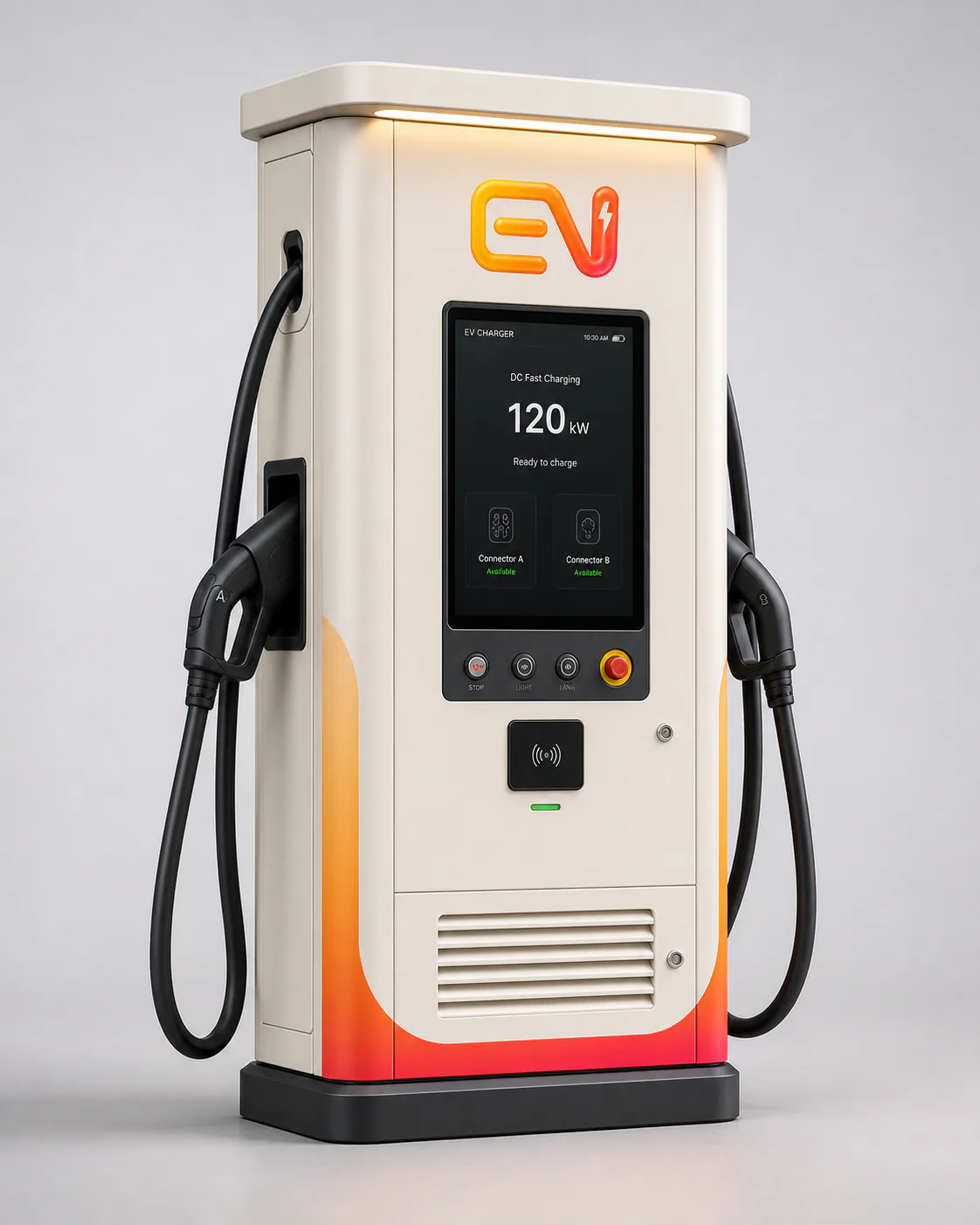
Compact DC charging dispenser
For public networks, commercial parking and fleet sites.
EV WHALE PRODUCTS & SYSTEMS
EV Whale combines battery-buffered commercial charging, charging dispensers, mobile charging and modular 1,500 V DC-class systems. Product scale follows the site's energy, power and operating duty.
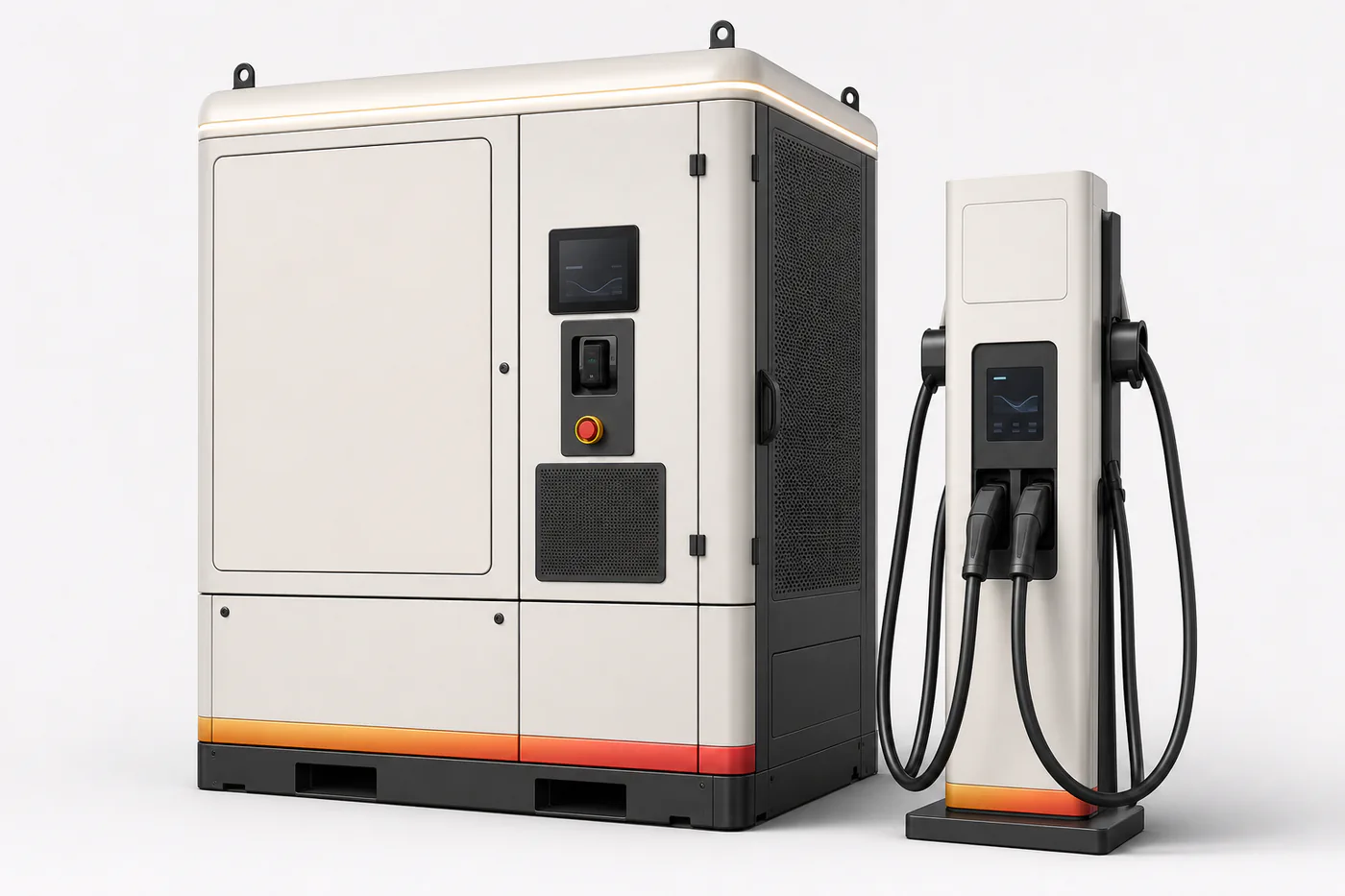
EV WHALE COMMERCIAL · CONCEPT
A compact system uses storage to bridge the gap between available site power and vehicle charging peaks. It can reduce or defer a major electrical upgrade while preserving the required engineering, DNSP and fire-safety process.
View target specifications →CHARGING DISPENSER CONCEPTS
Images show product direction only. Final connectors, dimensions, cooling, protection and power are subject to detailed engineering and certification.
For public networks, commercial parking and fleet sites.
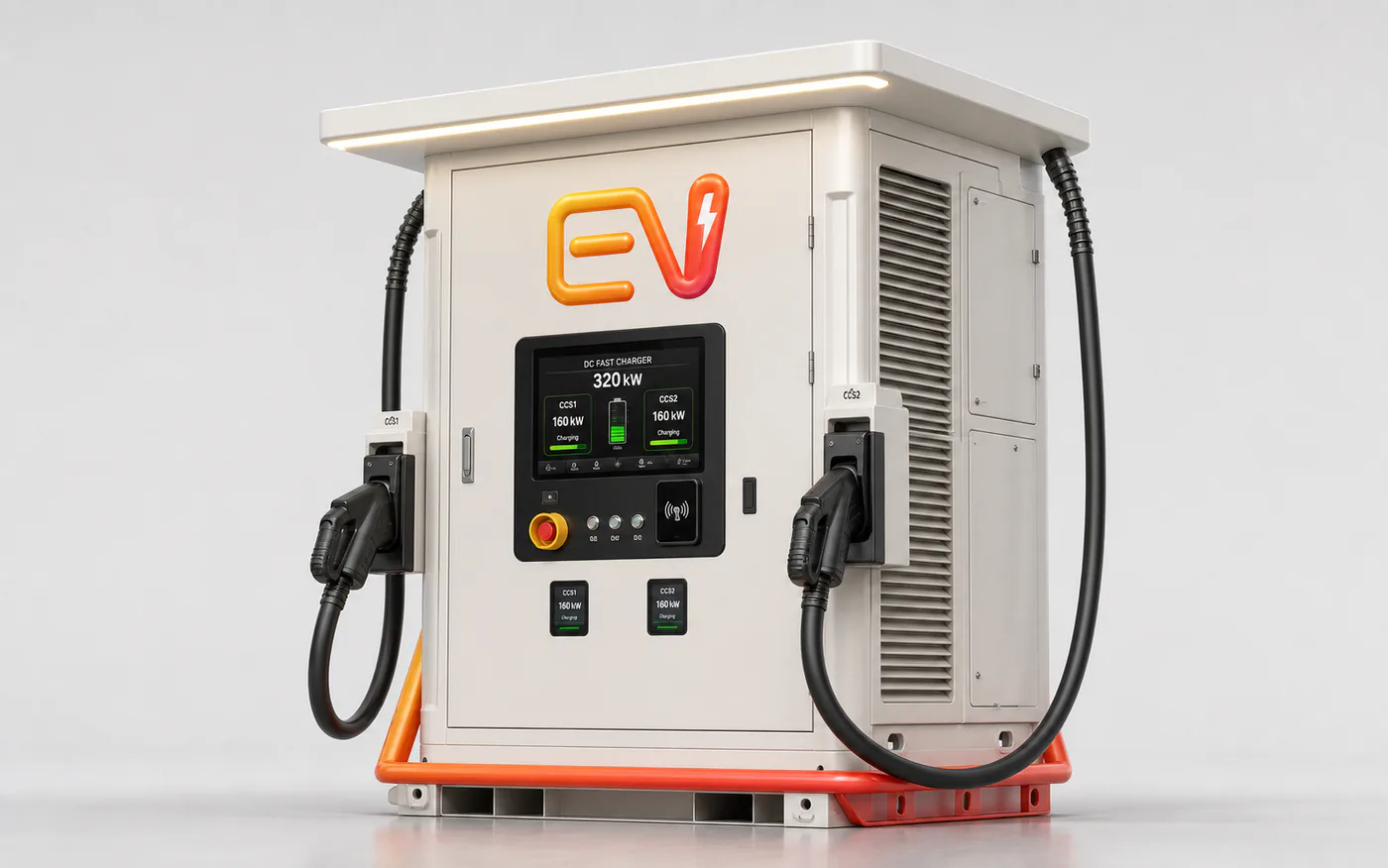
For trucks, buses, logistics and other high-utilisation vehicles.
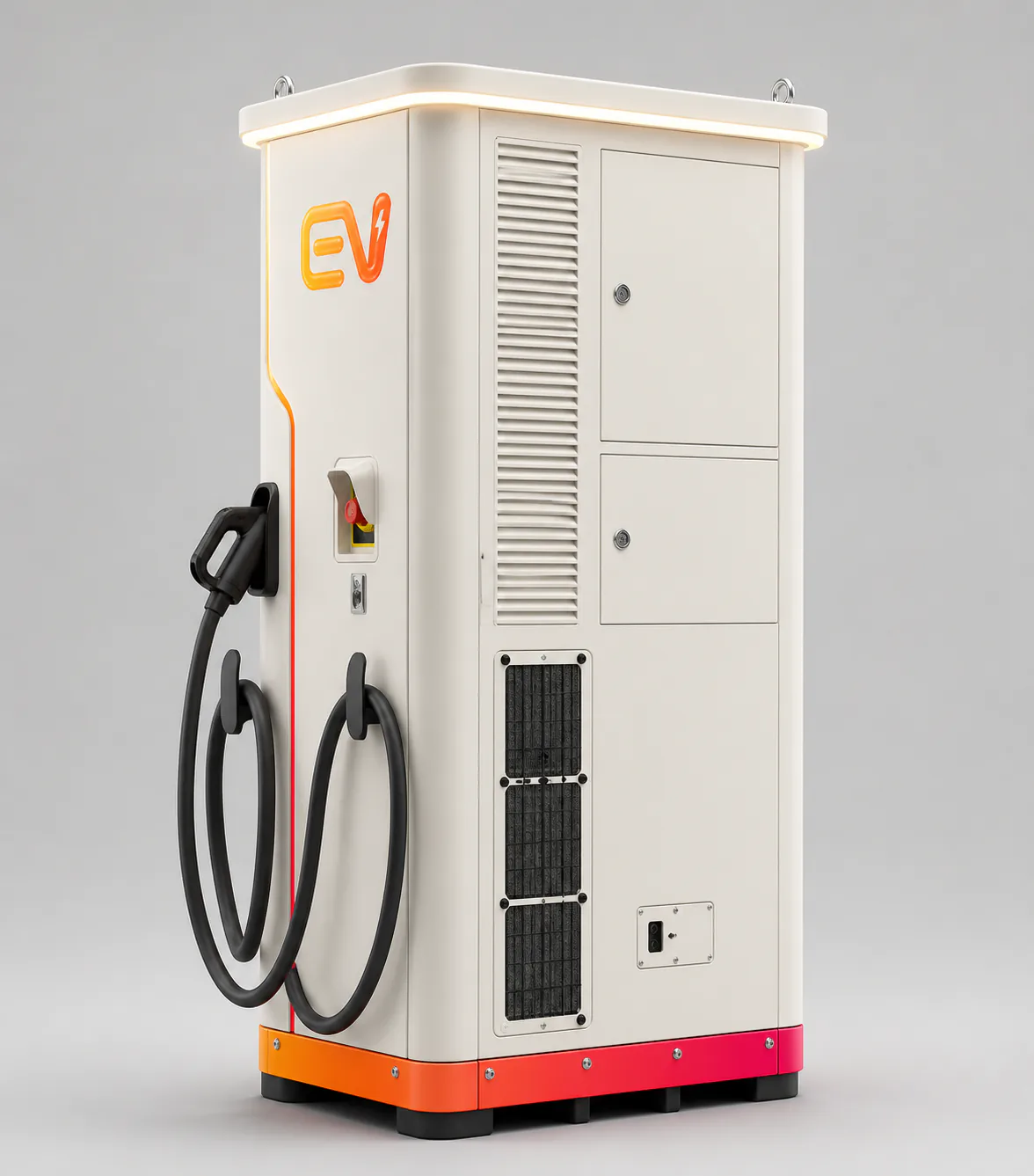
Final internal arrangement follows project power, cooling and maintenance requirements.
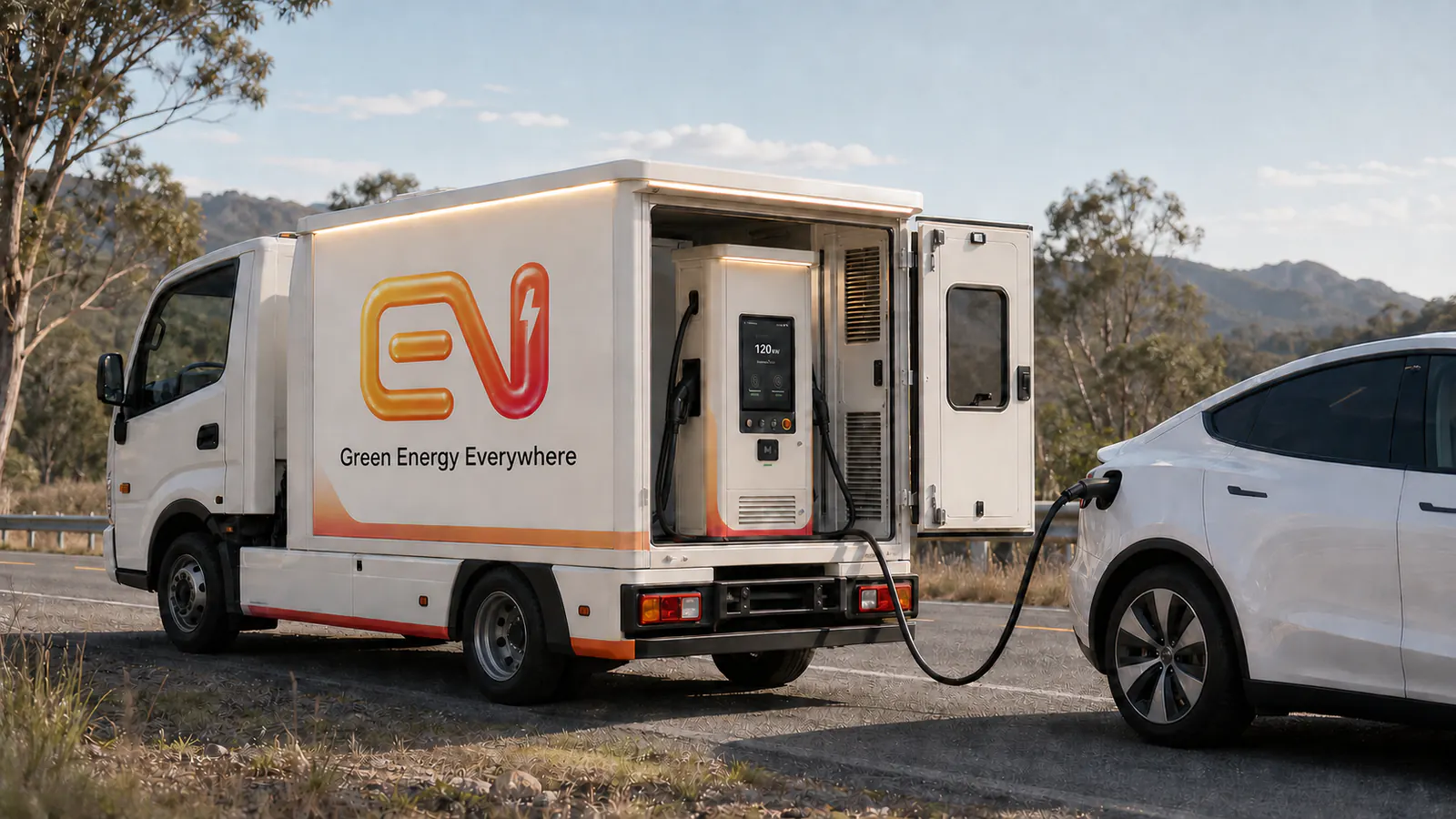
MOBILE CHARGING
Approximately 130 kWh of onboard storage with separate input and output DC/DC stages and a target output of approximately 60 kW.
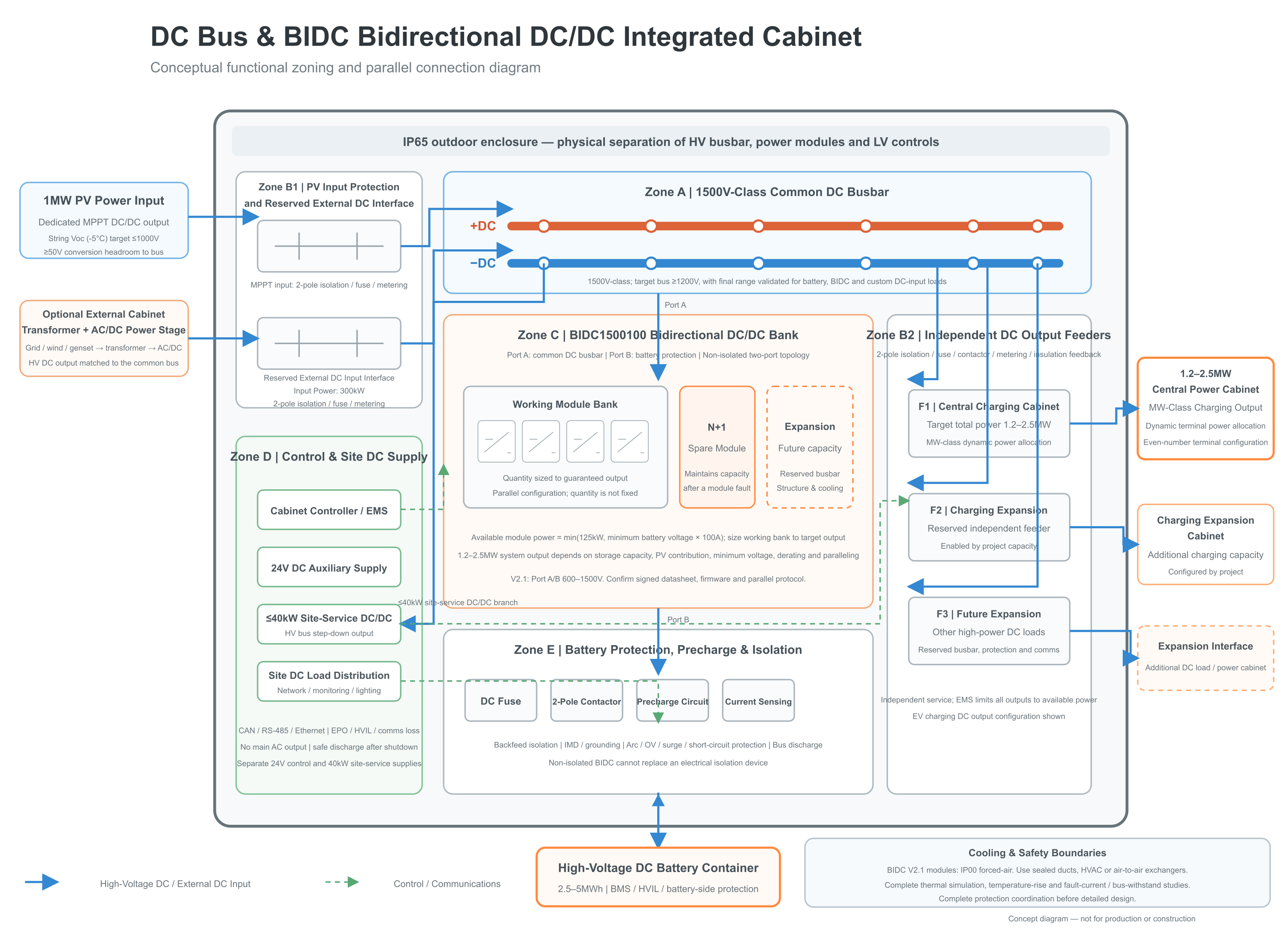
View mobile charging →INTEGRATED DC CABINET
Battery containers stay separate so storage can be maintained, replaced or expanded independently, reducing lifecycle upgrade cost.
TECHNICAL VALUE
An all-DC primary power path can reduce unnecessary conversion stages found in AC-led charging systems.
At a given power level, higher-voltage DC distribution can reduce current, cable losses and conductor requirements; actual savings depend on the project design.
Modular equipment boundaries and fewer conversion stages can reduce cable, conversion-equipment and future-upgrade costs under suitable project conditions. Actual savings remain project-specific.
A centralised shared-power system dynamically allocates available site capacity across passenger and heavy-vehicle charging dispensers.