Model vehicles or DC loads, operating windows, criticality and redundancy.
INDUSTRIAL & HIGH-UTILISATION SITES
DC charging and power for industrial sites.
We design DC systems for factories, ports, airports and mines, accounting for production demand, vehicle charging and maintenance.
Discuss your project →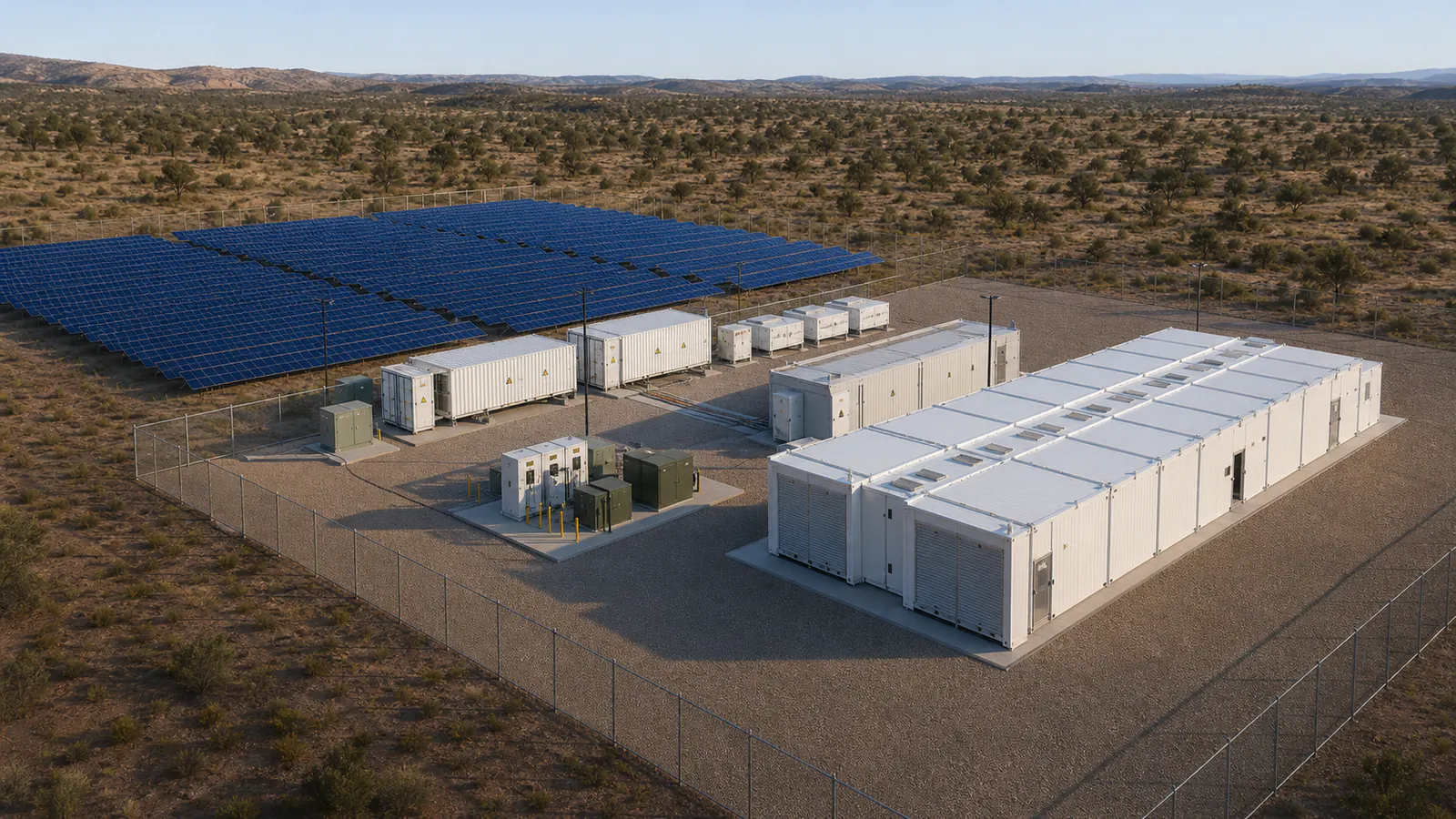
PROJECT CHALLENGE
Plan charging alongside production demand.
- Large vehicles and equipment may operate across long shifts with limited charging windows.
- Site loads can already occupy most available electrical capacity.
- Remote or critical operations require redundancy, maintainability and clear fault boundaries.
DELIVERY APPROACH
Engineer the energy system around the operation.
Assess solar, storage, external AC input and the DC-coupled system as one controlled site.
Define isolation, interlocks, EPO, communications loss and safe shutdown behaviour.
Separate battery, DC cabinet, charging power and charging-dispenser equipment for service and replacement.
DC-COUPLED TECHNICAL PATH
Battery storage adds power at charging peaks.
The site connection replenishes storage over time. DC/DC conversion releases higher charging power during demand peaks. Power and duration are sized from site load, usable energy and equipment capability.
Illustrative path · DC/DC can increase available charging power at the point of use, but it does not create energy. Duration remains limited by input power, storage, SOC, temperature and system derating.
LIFECYCLE VALUE
Separate equipment for easier maintenance.
Independent equipment boundaries can reduce the scope of a fault, replacement or technology upgrade. Final availability and redundancy are confirmed during detailed engineering.
FAQ
Questions project teams ask
Is this only for mining?
No. The same planning method can support buses, ports, airports, manufacturing, waste fleets and other high-utilisation private operations.
Can the platform supply non-vehicle DC loads?
Potentially. Native DC loads such as AIDC require their own voltage interface, protection, availability and certification studies.
Can diesel or grid power be retained?
Optional external AC sources can feed a separate transformer and AC/DC stage matched to the common DC bus.