
Through AC/DC conversion, within the site import limit.
SOLUTIONS / COMMERCIAL BATTERY-BUFFERED CHARGING
High-power fast charging from a limited grid connection.
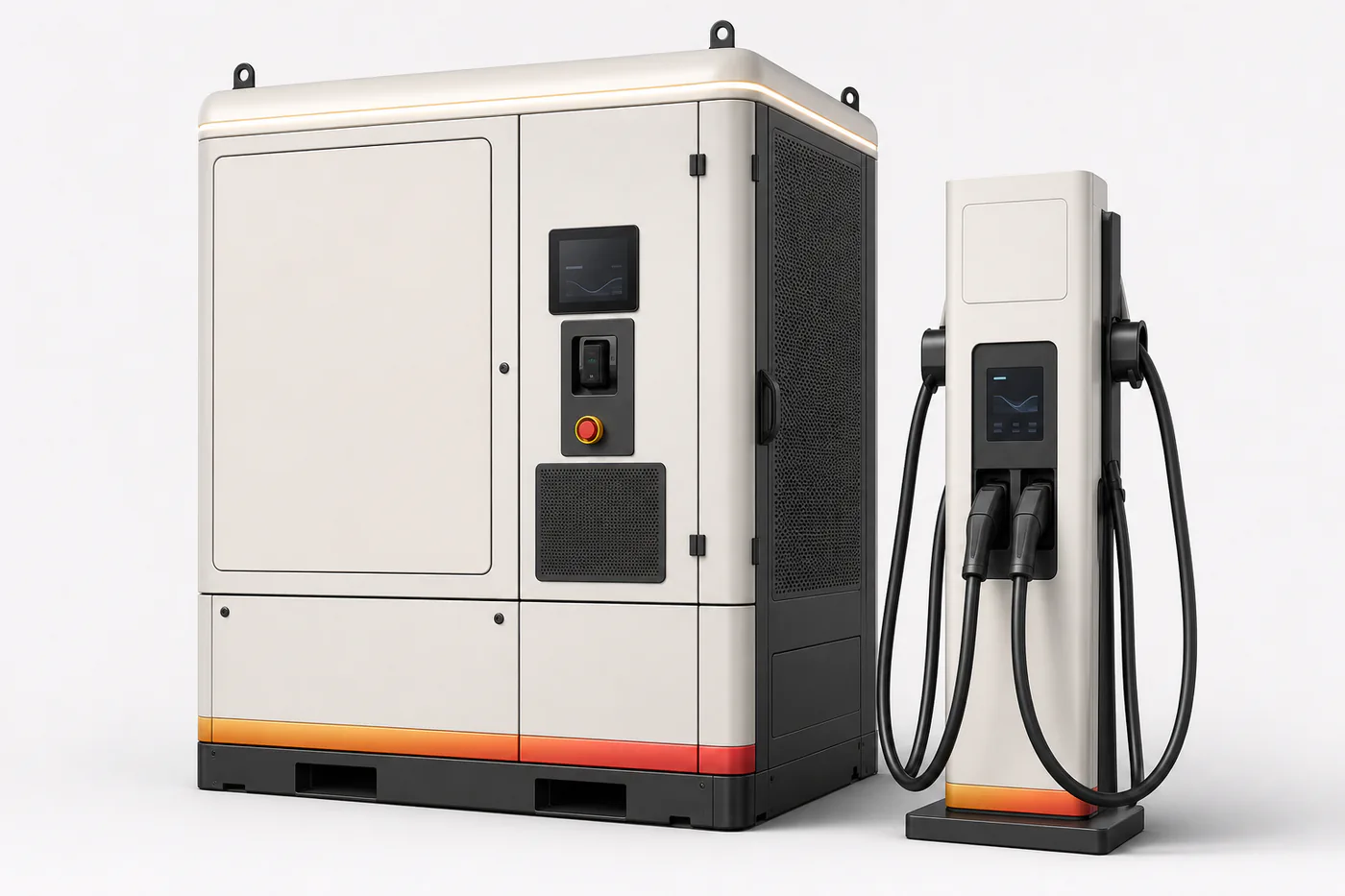
EV Whale stores energy from the site connection and optional solar, then releases it at higher power when vehicles arrive—helping reduce or defer a major electrical upgrade.
THE OPERATING PRINCIPLE
The grid supplies energy over time. The battery delivers power when demand peaks.
The battery stores energy between charging sessions and supplies extra power at busy times. Daily service capacity depends on grid and solar energy, battery recharge time, temperature and equipment limits.
Available charging power ≈ grid input + live solar + permitted battery dischargePOWER FLOW
Store energy between events, then deliver power when vehicles arrive.
Through dedicated MPPT DC/DC conversion.
Solar can supply charging directly without first passing through the battery.
Store surplus energy and support charging peaks.
Dynamic power allocation → EV dispensers
Conceptual power flow. Interfaces, voltage, protection and control are confirmed during project design.
WHERE IT FITS
Designed for sites where charging peaks are high but average demand is lower.
Retail & commercial parking
Shopping centres, supermarkets, convenience sites and paid parking where dwell time creates a charging opportunity.
Dealerships & service centres
Vehicle handover, demonstrator, workshop and customer charging without designing the entire site around one peak load.
Hospitality & destinations
Hotels, restaurants, wineries, tourism venues and event sites that want fast charging to support the customer visit.
Small fleets & depots
Delivery vans, community transport, municipal vehicles and return-to-base fleets with known charging windows.
Regional public charging
Town centres and road-service locations where a limited connection would otherwise restrict charging power.
Solar-equipped businesses
Use roof or carport solar to recharge storage, improve on-site renewable-energy use and support charging peaks.
A SCALABLE PRODUCT PLATFORM
From compact commercial charging to megawatt energy hubs.
Each project is configured around site input, daily energy, peak power, vehicle duty and expansion plans.
EV Whale Commercial
Battery-buffered commercial DC chargingA compact integrated unit or small modular system for retail, hospitality, dealerships, parking and small fleets.
EV Whale Regional
Regional and weak-grid sitesScalable storage, power cabinets and dispensers with optional on-site solar and external AC supply.
EV Whale Megawatt Hub
1,500 V DC-class megawatt platformA centralised shared-power system for high-throughput public charging, trucks, buses and intensive fleets.
PROJECT BOUNDARIES
Check daily energy supply and charging demand.
The approach can reduce dependence on major grid augmentation, but it does not remove DNSP, electrical, planning, fire-safety, traffic or public-charging requirements.
- Transformer, main switchboard, maximum demand and interval load
- Vehicle arrivals, required energy, dwell time and concurrency
- Usable storage, SOC window, thermal derating and recovery time
- Solar, space, noise, fire safety and future expansion
FREQUENTLY ASKED QUESTIONS
Key questions about battery-buffered charging.
Does battery storage remove the need for a grid upgrade?
Not in every project. It can reduce or defer a major upgrade by shifting energy over time, but average daily energy, existing loads, transformer and switchboard capacity, DNSP requirements and future demand still need to be assessed.
How can charging power be higher than the site import limit?
The site connection and solar recharge the battery between charging events. When a vehicle arrives, available grid, solar and battery power are combined within EMS, BMS and equipment limits.
How long can peak charging power be sustained?
That depends on usable battery energy, starting SOC, vehicle voltage, concurrent charging, temperature, recharge power and system derating. A duty-cycle model is required before a duration can be committed.
Can existing rooftop solar be used?
Often, subject to the existing inverter or a dedicated PV MPPT interface, protection, metering and control requirements. The preferred connection is confirmed during site design.
Can the system expand later?
Yes. EV Whale separates serviceable battery, power and charging functions where project scale allows, and reserves interfaces for staged storage, power-cabinet and dispenser expansion.
Are approvals still required?
Yes. Battery buffering does not remove electrical, planning, fire-safety, payment, public-charging or DNSP obligations.
SITE ASSESSMENT